2026 Top Industrial Servo Motor Trends You Need to Know?
The Industrial Servo Motor market is evolving rapidly. According to a recent report by Fortune Business Insights, the market is expected to reach $12.75 billion by 2026, growing at a CAGR of 6.9%. This growth is driven by advancements in automation and the demand for precision manufacturing. In many industries, these motors play a crucial role in enhancing efficiency and productivity.
However, despite this growth, challenges remain. Companies often face issues related to integration and repair. The complexity of servo systems requires skilled technical staff. Businesses need to address these gaps to fully benefit from the technology. This includes investing in training and development.
Emerging trends like AI integration and IoT connectivity are redefining the landscape of Industrial Servo Motors. Companies must adapt to these changes to compete effectively. The evolving needs of automation and precision highlight the importance of understanding these trends for strategic planning.

Key Innovations in Servo Motor Technology for 2026
In 2026, the industrial servo motor landscape will witness significant innovations. Key advancements will enhance efficiency and precision. Research indicates that the global servo motor market will reach $9 billion by 2026, driven by demand in automation and robotics.
One notable trend is the integration of artificial intelligence. AI algorithms will optimize performance and reduce downtime. This development allows for predictive maintenance, potentially saving companies 20% on operational costs. However, relying too much on AI may lead to oversight in manual checks.
Another area to watch is energy efficiency. Manufacturers are focusing on motors that consume less power without sacrificing performance. Some new models promise energy savings of up to 30%. However, the transition to these advanced motors can be challenging, requiring retraining and adjustments.
**Tip:** Regularly evaluate your existing equipment to identify where improvements can be made. Incremental changes often yield the most significant results over time.
Embracing these innovations can be daunting. Companies must reflect on their current practices and adapt. Staying informed and flexible is key to leveraging the latest trends in servo motor technology.
2026 Top Industrial Servo Motor Trends You Need to Know
| Trend |
Description |
Impact |
Estimated Adoption Rate |
| Increased Use of AI |
Integration of AI for real-time performance monitoring and optimization. |
Enhanced efficiency and predictive maintenance capabilities. |
60% |
| Miniaturization |
Development of smaller motors without compromising performance. |
Increasing application in limited space environments. |
45% |
| Energy Efficiency |
Focus on producing energy-efficient motors to lower operational costs. |
Reduction in energy costs and environmental impact. |
75% |
| Smart Servo Motors |
Implementation of IoT technology for remote monitoring and control. |
Improved data analytics and machine performance. |
55% |
| Advanced Materials |
Use of lightweight and durable materials in motor construction. |
Enhanced durability and reduced weight. |
50% |
Emerging Applications of Servo Motors in Various Industries
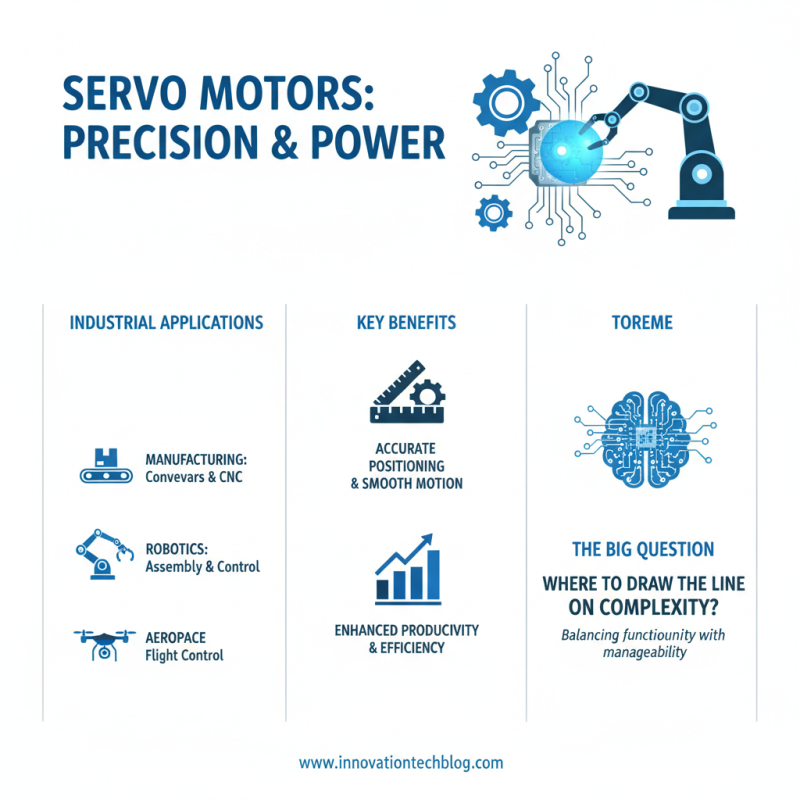
The use of servo motors has been expanding across various industries. These motors are essential for precise control in automation and robotics. For instance, in the manufacturing sector, they drive conveyor belts, robotic arms, and CNC machines. They allow for accurate positioning and smooth movement, which enhances productivity. However, where do we draw the line on complexity?
In the automotive industry, servo motors control automated assembly lines. They help with tasks such as screwing parts and painting vehicles. This contributes to higher efficiency and reduced human error. Yet, this reliance raises questions. Are we becoming too dependent on technology?
Healthcare is also seeing a rise in servo motor applications. Surgical robots use these motors for accurate movements during procedures. They improve patient outcomes significantly. Nonetheless, there is an ongoing debate about the risks involved. How do we balance innovation with safety? As industries evolve, the role of servo motors will continue to grow. But reflection on our dependence is crucial.
Impact of AI and Machine Learning on Servo Motor Performance
The rise of artificial intelligence (AI) and machine learning is transforming the performance of servo motors. These technologies enhance precision control and efficiency. Predictive maintenance is one significant area of impact, reducing downtime. It allows for timely interventions before issues escalate. This capability is crucial in high-demand industrial settings.
Moreover, AI can optimize the overall performance of servo motors. Algorithms analyze real-time data to adjust parameters dynamically. This adaptability leads to improved energy efficiency. However, the implementation process can be challenging. It requires significant investment in training and data management.
While these advancements are promising, they are not without obstacles. Integration with existing systems can lead to compatibility issues. Additionally, workforce skills may lag behind technology. These hurdles necessitate careful planning and training. Artificial intelligence is changing the landscape, but human oversight remains vital.
2026 Top Industrial Servo Motor Trends
Sustainability Trends Influencing Servo Motor Design and Manufacturing
Sustainability is reshaping the servo motor industry in profound ways. Industries are moving towards greener practices. A report by the International Energy Agency noted that electric motors – including servos – account for about 45% of the world’s electricity consumption. This statistic emphasizes the need for eco-friendly designs that enhance energy efficiency.
Manufacturers are focusing on using recyclable materials in servo motors. Eco-friendly components reduce waste and lower the carbon footprint. Furthermore, advanced production techniques aid in minimizing energy use. A survey conducted by the Electric Drives and Controls Association revealed that over 70% of companies prioritize sustainability when designing new models. However, the challenge remains: achieving balance between performance and environmental responsibility.
Another trend is the adoption of smart technologies in servo motors. These technologies optimize performance and provide data for energy management. While this shift is promising, it raises concerns about the reliability of new materials in tough industrial environments. Industry experts indicate that not all manufacturers are ready to embrace this change fully. The path to sustainable servo motor design is not without obstacles, but the potential benefits demand urgent attention.
Market Growth Predictions for Industrial Servo Motors by 2026
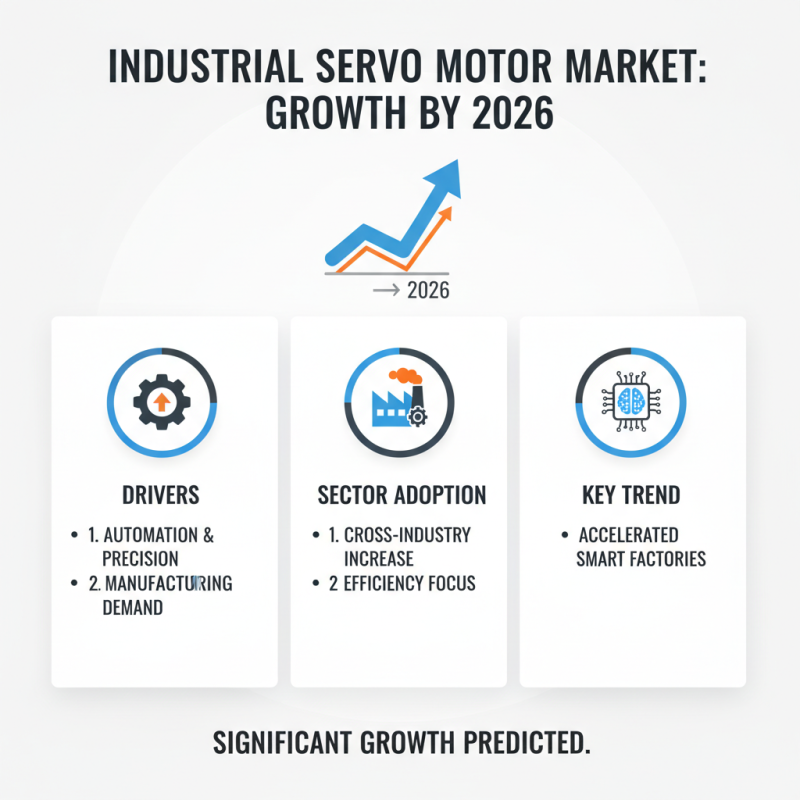
The industrial servo motor market is poised for significant growth by 2026. The rising demand for automation and precision in manufacturing drives this trend. Experts predict a continuous increase in adoption across various sectors. Industries are focusing on efficiency and performance improvements. The shift towards smart factories is accelerating the use of these motors.
Emerging technologies will play a key role. Integration with IoT and AI can enhance motor capabilities. This offers real-time monitoring and predictive maintenance. However, challenges remain. Many companies struggle with the high initial costs associated with upgrading systems. Not every manufacturer is ready to embrace the change. Some may resist, fearing operational disruptions.
Furthermore, the supply chain issues could hinder growth. The demand for raw materials may exceed supply, impacting production rates. Companies must plan carefully to navigate these obstacles. A clear understanding of market trends and customer needs will be crucial for success. Investing in modern solutions can lead to long-term benefits. Yet, companies must also consider their unique hurdles and adapt accordingly.


 Baijia Hao