2026 Top Servo Drive Technologies and Their Applications?
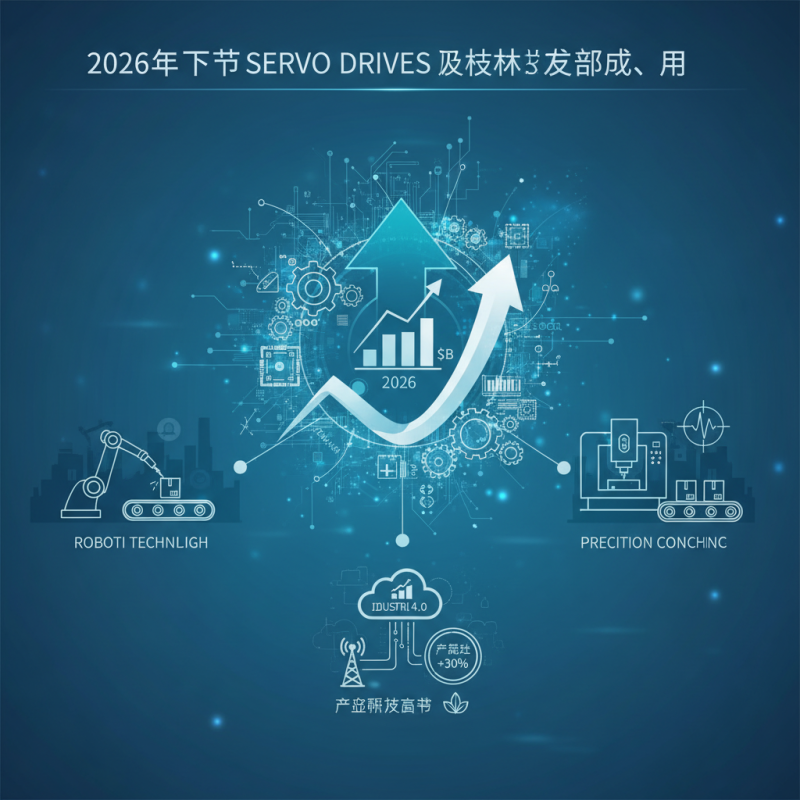
The rise of automation across industries is driving rapid advancements in servo drive technologies. According to a recent report by MarketsandMarkets, the global servo drive market is expected to reach $8.15 billion by 2026, growing at a CAGR of 6.9%. This growth highlights the increasing demand for precision control solutions in robotics, manufacturing, and other sectors.
Servo drives enhance the performance of electric motors, enabling smoother operations and greater energy efficiency. Studies show that implementing advanced servo systems can increase productivity by up to 30%. These systems allow for sophisticated motion control, vital for applications ranging from CNC machines to conveyor systems. However, companies must confront challenges such as integration with legacy systems and technical complexities that can hinder full adoption.
In this rapidly evolving landscape, staying informed about the latest technologies is essential. Servo drive innovations include improved communication protocols and integration with Industry 4.0 concepts. Companies must adapt to leverage these advancements, or they risk falling behind. The future of servo drives is dynamic, with the potential to unlock new opportunities, yet businesses must reflect on their capabilities in navigating this complex market.
Overview of Servo Drive Technologies in 2026
Servo drive technologies are rapidly evolving in 2026. These systems control the motion of machines precisely. In industrial automation, energy efficiency and performance are crucial. Today’s servo drives often integrate advanced algorithms. These algorithms enhance responsiveness and precision. However, not all systems achieve consistent performance.
One notable trend is the move towards compact designs. Smaller drives save space and energy. Yet, with miniaturization comes the challenge of overheating. Proper thermal management becomes essential. Some designs struggle to maintain cool operating temperatures. Users must account for this when selecting technology.
Additionally, connectivity is a key feature this year. Many servo drives now include IoT capabilities. This connectivity enables real-time monitoring and data analysis. However, cybersecurity concerns arise with increased connectivity. Users need to be vigilant against potential threats. The balance between innovative features and safety remains a critical consideration in the development of servo technologies.
Key Innovations in Servo Drive Systems for Enhanced Performance
Servo drive systems are evolving. Key innovations focus on enhancing efficiency and precision. Recent studies show that advanced technologies outperform traditional models by up to 30% in energy savings. This statistic highlights the growing demand for energy-efficient solutions.
Recent developments include improved feedback mechanisms. These systems now utilize high-resolution encoders. The result? Precision control that reduces the risk of errors. Additionally, machine learning algorithms enable predictive maintenance. They can forecast potential failures, reducing downtime by almost 25%. However, implementing these technologies can be complex. Companies need to invest in training and infrastructure.
These innovations are set against a background of rising industry expectations. The market for servo drives is projected to grow significantly. Analysts suggest a compound annual growth rate (CAGR) of around 8% by 2026. While this presents opportunities, it’s crucial to address integration challenges. Many firms still struggle with legacy systems. Balancing innovation with existing setups remains a key obstacle.
2026 Top Servo Drive Technologies and Their Applications
This chart illustrates the performance enhancements of various servo drive technologies expected in 2026. The data represents advancements in three main areas: Energy Efficiency, Precision Control, and Response Time across different servo drive technologies.
Applications of Servo Drives Across Various Industries
Servo drives are transforming industries in innovative ways. In manufacturing, they enhance precision in robotic arms. These drives allow for smoother movement and better control, which improves efficiency. Many factories are adopting these technologies to reduce waste and increase productivity. Machines equipped with servo drives can adapt quickly to different tasks.
In robotics, servo drives enable enhanced coordination. They allow robots to perform complex movements, mimicking human dexterity. This level of control enhances the robots' ability to work alongside humans. However, integration can be challenging. The tuning process may take time and expertise.
In the automotive industry, servo drives play a critical role in assembly lines. They ensure accurate placement of components in vehicles. However, the initial setup requires careful calibration and can lead to downtime. This must be properly managed to avoid delays. Overall, while servo drives offer significant advantages, their implementation may face hurdles that require continuous evaluation.
2026 Top Servo Drive Technologies and Their Applications
| Technology |
Key Features |
Applications |
Industries |
| Brushless Servo Drives |
High efficiency, low maintenance, compact size |
Robotic arms, CNC machines, conveyor systems |
Manufacturing, Automation |
| AC Servo Drives |
Fast response, high control precision |
Textile machines, packaging machines, woodworking machines |
Textiles, Packaging, Woodworking |
| DC Servo Drives |
Simple control, cost-effective |
Wheelchairs, electric vehicles, small robotics |
Healthcare, Automotive |
| Digital Servo Drives |
Advanced diagnostics, improved control algorithms |
3D printing, automated guided vehicles (AGVs) |
Aerospace, Logistics |
| Integrated Servo Drives |
Space-saving, fewer components |
Small machinery, packaging applications |
Food & Beverage, Electronics |
Comparative Analysis of Leading Servo Drive Brands and Models
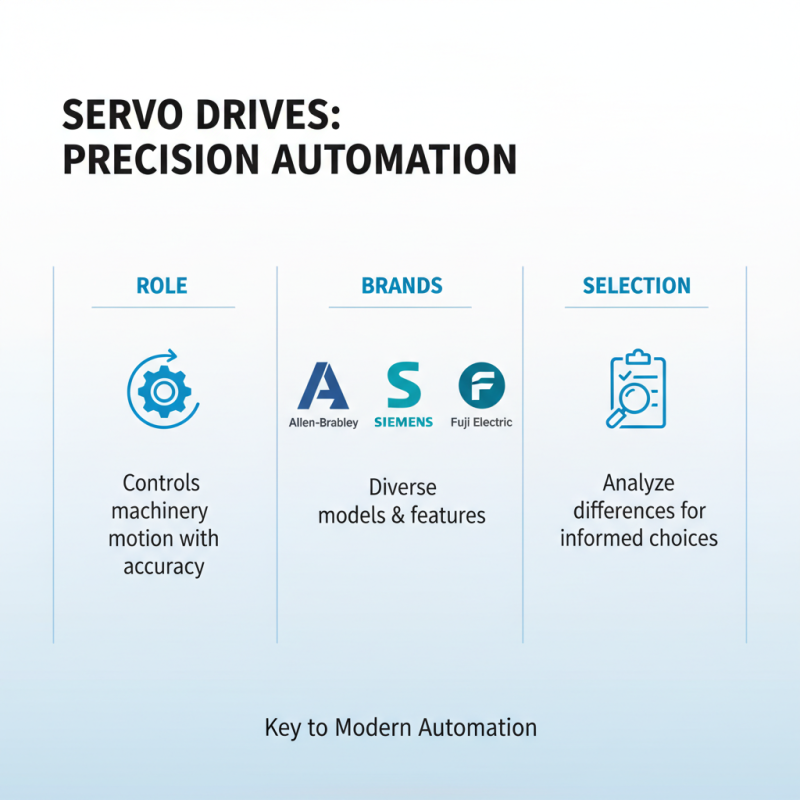
In the fast-evolving world of automation, servo drives play a crucial role. These devices control the motion of machinery with precision. Different brands offer various models, each with unique features. It is essential to analyze these differences to make informed choices.
When considering performance, some models excel in speed. Others focus on torque. Yet, many users overlook the importance of user interface. A complex setup can lead to operational errors. Simplicity matters in efficient programming. Additionally, compatibility with existing systems can be a challenge. Not all servo drives integrate smoothly.
Cost can also be a deciding factor. While cheaper options may tempt buyers, they often lack durability. Long-term investment in reliable technology usually pays off. Brands with robust customer support should not be ignored. Users often report better experiences with technical assistance. The choice of a servo drive should consider future scalability as well. A model that fits today's needs might not serve well tomorrow. This shift is a point for reflection when selecting a system.
Future Trends and Developments in Servo Drive Technology
The future of servo drive technology is both exciting and unpredictable. One key trend is the shift towards increased intelligence in servo systems. Smart algorithms will enhance performance and adaptability. These innovations will allow servo drives to adjust parameters in real-time. Such capabilities could lead to increased efficiency in various applications.
Another development is the growing emphasis on energy efficiency. As industries strive for sustainability, servo drives will play a vital role. Advanced designs may offer lower energy consumption without compromising performance. This could pose challenges in balancing power and efficiency. Additionally, the integration of IoT technologies will enable remote monitoring and diagnostics.
However, these advances come with their own set of challenges. Developing smart, energy-efficient systems requires significant investment in research and development. There is also a need for skilled professionals who can manage this technology. As we embrace these trends, the road ahead must be navigated carefully.


 Baijia Hao