Top 10 Benefits of Industrial Servo Motors for Automation?
Industrial Servo Motors play a crucial role in modern automation. They offer precision and control that traditional motors often lack. In industrial settings, efficiency is paramount. Servo motors provide this efficiency with their unique design and functionality.
One of the key advantages of Industrial Servo Motors is their ability to deliver consistent performance. This consistency translates into reduced downtime and increased productivity. With the growing demand for automation, industries must adapt quickly. However, some may struggle to implement these systems effectively.
Another benefit is their energy efficiency. Industrial Servo Motors consume less power compared to other motor types. This not only reduces operating costs but also minimizes the environmental impact. Yet, the initial investment can be significant. Companies must weigh these factors when considering automation solutions. Embracing the potential of servo motors can lead to transformative changes in manufacturing processes.
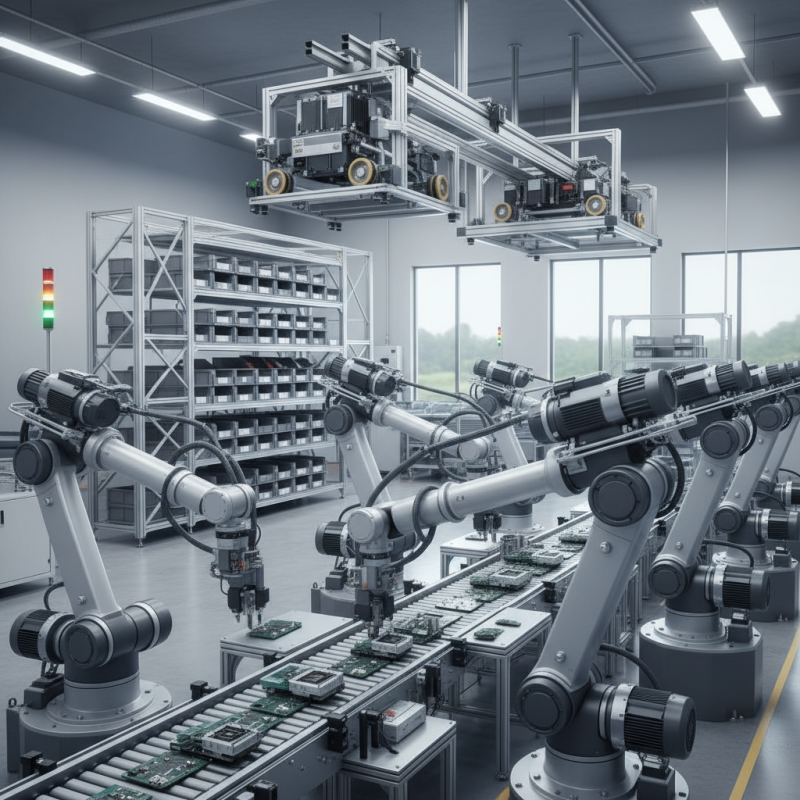
Advantages of Precision Control in Industrial Servo Motors
Precision control in industrial servo motors plays a crucial role in automation. These motors offer high accuracy, ensuring tasks are completed with minimal deviation. This level of precision is vital in industries like manufacturing and robotics. For instance, a car assembly line relies on servo motors to position components with exactness. Small errors can lead to significant issues in production.
Moreover, servo motors are adept at maintaining consistent speed and torque. This reliability allows for smoother operations and better product quality. A slight fluctuation in speed can affect the outcome, especially in processes that require detailed craftsmanship. Not all systems achieve this level of control, and some still struggle with backlash and inefficiencies.
However, implementing servo motors is not without its challenges. The initial investment can be steep, and it requires a skilled workforce to handle them. Additionally, some systems might need retrofitting to fully utilize their capabilities. Reflecting on these aspects is necessary for companies considering automation. Balancing cost and precision can be a daunting task, yet it’s essential for long-term success.
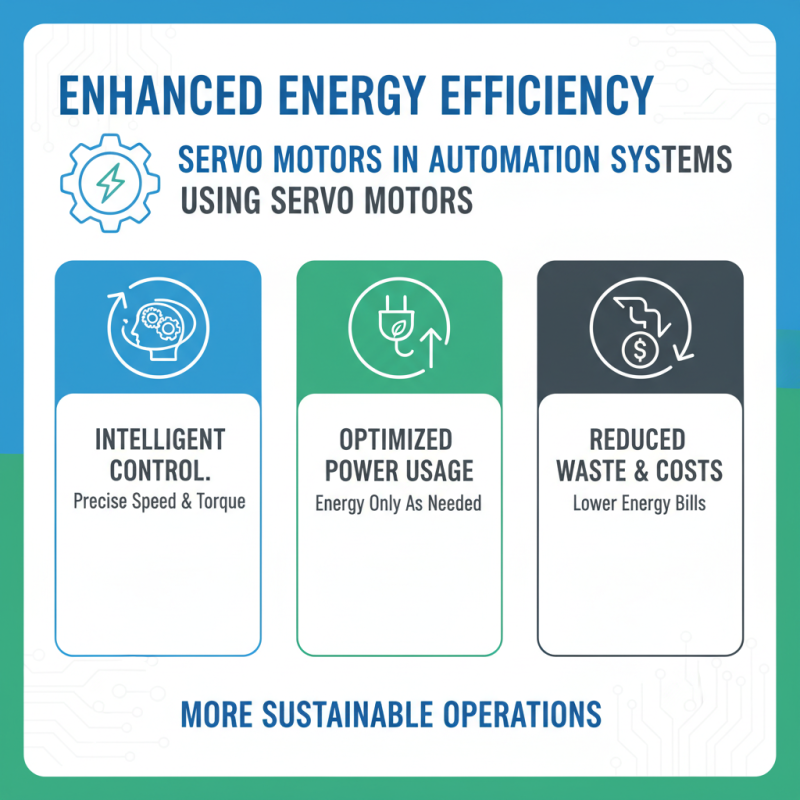
Enhanced Energy Efficiency in Automation Systems Using Servo Motors
The implementation of servo motors in automation systems significantly enhances energy efficiency. These motors intelligently control speed and torque. They only use the exact energy needed for operation. This results in less wasted power. As a result, companies can see lower energy bills over time.
When examining real-world applications, the advantages become evident. For instance, servo motors in robotic arms allow for precise movements. This precision means less energy is lost during operation. Yet, some may find that achieving optimal performance requires careful calibration. Without proper settings, energy savings may not be realized. Hence, ongoing monitoring becomes essential.
Moreover, servo motors contribute to reducing the overall environmental footprint. They produce less heat, minimizing cooling needs. However, users must ensure they understand the technology fully. Misuse can lead to increased energy consumption. Overall, the shift toward servo motors reflects a commitment to sustainability in automation.
Increased Reliability and Durability of Industrial Servo Motors
In industrial automation, reliability and durability are crucial. Industrial servo motors stand out for their sturdy construction. They can operate in extreme conditions, enduring high temperatures and humidity. This makes them suitable for various applications, from robotics to CNC machines.
Moreover, these motors often feature advanced materials. These materials enhance their lifespan. Regular maintenance may still be necessary, but the need is significantly reduced. Some users might find that, after just a year, their motors show little wear. This reliability translates into fewer disruptions in production lines.
However, not all servo motors are created equal. Variability in quality exists. Potential buyers should always verify specifications and performance data. Investing time in research is vital. This ensures that the chosen motor meets the specific needs efficiently. In the end, a wise choice can greatly enhance operational reliability.
Top 10 Benefits of Industrial Servo Motors for Automation
Versatility and Adaptability in Various Automation Applications
Industrial servo motors are gaining traction in automation due to their versatility and adaptability. Reports indicate that the global servomotor market is expected to reach $11 billion by 2026, reflecting a substantial increase in demand across various sectors. These motors can easily switch between tasks, making them ideal for complex manufacturing environments. They enhance productivity by reducing cycle times, yet adapting to different roles can complicate setup processes.
In environments like robotics and conveyor systems, servo motors excel. Their precision allows for intricate movements, crucial for assembly lines. However, this precision often comes with a learning curve. Engineers may need to recalibrate systems frequently, which can slow initial integration. Studies show that companies using servo motors report a 15% increase in operational efficiency, yet the initial investment and training can be daunting.
Despite these challenges, the adaptability of industrial servo motors cannot be overlooked. They can operate effectively in varying conditions and applications, from CNC machines to packaging equipment. Companies also appreciate the reduced energy consumption, leading to cost savings over time. Nonetheless, this transition to servo technology may require ongoing adjustments as innovations continue to emerge.
Top 10 Benefits of Industrial Servo Motors for Automation
| Benefit |
Description |
Impact on Automation |
| High Precision |
Delivers accurate motion control, improving operational efficiency. |
Enhances quality and consistency in production. |
| Speed |
Rapid response with fast acceleration and deceleration profiles. |
Increases throughput and reduces cycle time. |
| Energy Efficiency |
Optimizes power usage, reducing operational costs. |
Lower energy bills and environmental impact. |
| Compact Design |
Space-saving configurations suitable for tight areas. |
Flexibility in design and installation. |
| Reliability |
Durable components ensure long life and low maintenance. |
Minimizes downtime and repair costs. |
| Flexibility |
Easily configurable for various applications. |
Supports diverse automation requirements. |
| Feedback Control |
Continuous data input for precise corrections. |
Enhances operational accuracy and responsiveness. |
| Noise Reduction |
Operates quietly due to advanced technology. |
Improves workplace environment and safety. |
| Integration |
Seamlessly works with existing automation systems. |
Facilitates upgrading of automation lines. |
| Cost-effectiveness |
Provides a strong return on investment over time. |
Improves overall profitability and competitiveness. |
Simplified Integration with Existing Automation Frameworks
Automation has become integral in modern manufacturing. Industrial servo motors play a critical role in this shift. Their ability to integrate seamlessly into existing systems is a significant advantage. This simplified integration reduces downtime during installation, allowing smooth transitions between old and new technologies.
Tip: Always evaluate your current setup before introducing new motors. Ensure that existing controllers can handle the new servo motors with minimal adjustments.
Additionally, consider training staff on these integrations. Familiarizing your team with new technologies can accelerate adoption. This reduces the learning curve and enhances productivity in the long run.
Tip: Schedule regular training sessions to keep your team updated. This investment can pay off significantly.
Despite the advantages, some challenges remain. Older systems may require some retrofitting. Be prepared for unexpected complications. Each integration experience can vary. Adaptability is key to navigating these changes.


 Baijia Hao