How to Choose the Right Servo Drive for Your Application?
In today's manufacturing landscape, selecting the right servo drive is vital for optimizing system performance. The global servo drive market is projected to reach USD 13.5 billion by 2027, as reported by industry experts. This growth underscores the necessity for businesses to invest in effective and reliable servo drive solutions.
Servo drives play a crucial role in motion control systems. Choosing the correct servo drive impacts efficiency, precision, and overall productivity. A wrong choice may lead to operational inefficiencies, increased costs, and even system failures. Despite the wide range of options available, many organizations struggle to navigate this complex decision.
It's essential to assess application requirements comprehensively. Factors like load characteristics, control algorithms, and environmental conditions must be considered. Not all servo drives are created equal, and a lack of detailed analysis can result in inadequate performance. Understanding these elements contributes to better decision-making and market competitiveness.

Understanding the Basics of Servo Drives and Their Applications
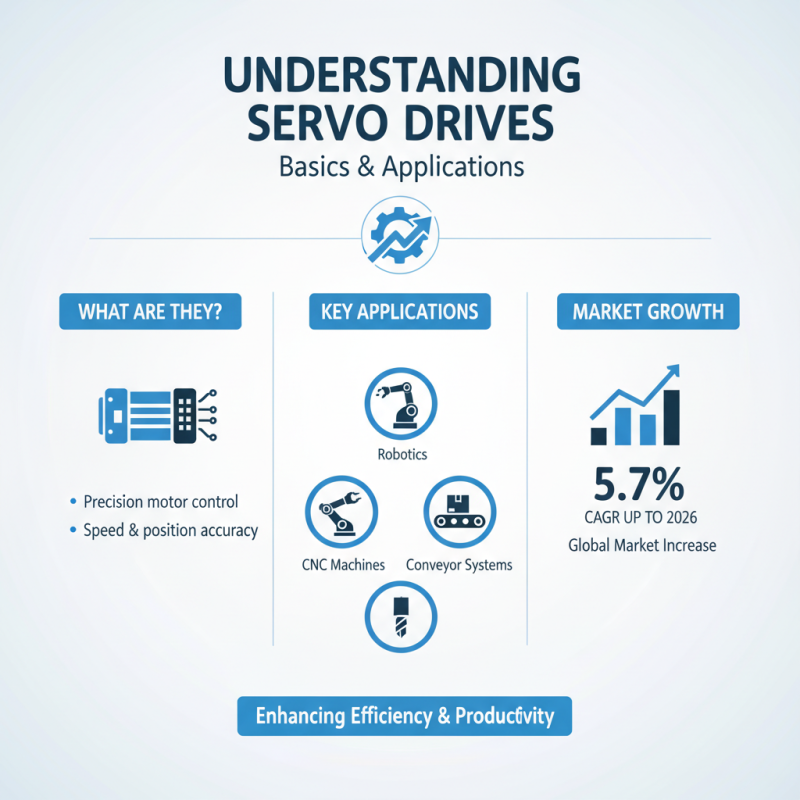
When exploring servo drives, understanding their basics is essential. Servo drives control motors with precision and speed. They are vital in robotics, CNC machines, and conveyor systems. According to industry reports, the global servo drive market is expected to grow at a compound annual growth rate (CAGR) of 5.7% through 2026. This growth signifies the increasing reliance on automation in various sectors, enhancing efficiency and productivity.
Choosing the right servo drive requires consideration of its application. Factors like torque, speed, and load are critical. For instance, in an assembly line, a drive that offers high torque and rapid response time might be necessary. Conversely, in robotic arms, precise positioning is paramount. Misjudging these requirements can lead to inefficiencies. A 2020 report highlighted that 40% of users experience underperformance due to ill-suited servo drives.
It’s crucial to weigh features against costs and performance. Not all applications need high-end features. Sometimes, a simpler drive suffices. A 2019 survey revealed that 30% of users selected drives based on cost rather than suitability. This can result in future complications or limited functionality. Understanding the basics allows for informed decisions, which ultimately improves overall system performance.
Comparing Different Types of Servo Drives: Pros and Cons
When selecting a servo drive, understanding the different types available is crucial. There are three main types: AC servo drives, DC servo drives, and stepper motor drives. AC servo drives are widely used in industries that require precision and high efficiency. Reports show that they provide 20% more energy efficiency compared to older technologies. However, they can be more complex to implement.
DC servo drives are simpler and more cost-effective. They are ideal for applications requiring lower power. Yet, they may lack the speed and precision of AC counterparts. This trade-off is essential to consider, particularly for high-performance applications. Meanwhile, stepper motor drives offer precise control in open-loop systems. They are often easier to program but can struggle with high torque needs.
Ultimately, the performance trade-offs between these types depend significantly on the application requirements. Understanding the specific needs is vital. Data suggest that about 30% of users overlook compatibility with existing systems. This oversight can lead to inefficiencies. Evaluating how a servo drive integrates into your setup is a necessity, not a luxury.
Comparison of Different Types of Servo Drives
This chart compares the performance ratings of different types of servo drives, helping you to make an informed decision based on their strengths and weaknesses.
Assessing Compatibility with Your Existing Systems and Components
Choosing the right servo drive for your application requires careful consideration of compatibility. Ensuring that your new servo drive integrates seamlessly with existing systems is crucial to maintaining efficiency. According to a recent industry report by the International Society of Automation, 70% of operational failures stem from incompatibility between components. This statistic highlights the importance of conducting a thorough compatibility assessment.
When evaluating servo drives, focus on communication protocols. Check if your existing systems use standard protocols like EtherCAT or CANopen. This step prevents potential disruptions. Additionally, consider the power requirements of your applications. A mismatch can lead to overheating or underperformance. Always refer to your system’s specifications.
Tip: Create a checklist before selecting a servo drive. Include compatibility with existing hardware and software, communication standards, and power ratings. This approach will streamline your decision-making process. Remember, investing in a compatible drive can save costs and avoid unexpected downtime.
While many drives may look appealing, it’s vital to ask the right questions. For instance, how does the proposed drive align with your control architecture? Misalignment could result in inefficient performance. Reflect on your system's long-term needs. Adaptability should be a priority, as future upgrades may depend on your current choices.
Calculating Performance Requirements for Optimal Efficiency
Selecting the right servo drive demands an understanding of performance requirements. Assessing torque, speed, and thermal characteristics is vital. According to recent industry analysis, around 30% of energy efficiency loss in servo systems arises from improperly matched drives. This emphasizes the importance of accurate calculations.
Begin by determining your application's load requirements. Calculate the necessary torque to handle that load efficiently. A modeling study indicated that over 50% of servo applications use inadequate torque settings, leading to reduced lifespan and increased energy consumption. For optimal results, always reference standardized torque curves relevant to your application.
Finally, ensure that speed specifications align with your operation needs. An evaluation of servo system performance shows that 40% of users experience suboptimal speed due to oversights in specifications. Ultimately, focusing on detailed performance calculations and aligning them with specific application requirements can lead to enhanced efficiency and longevity of the system. This process requires attention and ongoing assessment for continual improvement.


 Baijia Hao