How to Choose the Right Stepper Motor Controller for Your Project?
Choosing the right Stepper Motor Controller is crucial for any automation project. According to a market report by Research and Markets, the global stepper motor market is expected to reach $6.24 billion by 2025, highlighting its significant role across various industries. Interestingly, Dr. Alex Thornton, a leading expert in motion control technologies, noted, "Selecting the right controller directly impacts performance and reliability."
The importance of a compatible Stepper Motor Controller cannot be overstated. Misalignment between the motor and the controller can lead to operational inefficiencies. Precision is key, as suboptimal choices can introduce unexpected errors. For instance, a poorly matched controller might not deliver the required torque or speed. Additionally, with advancements in technology, users are often faced with a plethora of options. This variety, while promising, can also overwhelm decision-making processes.
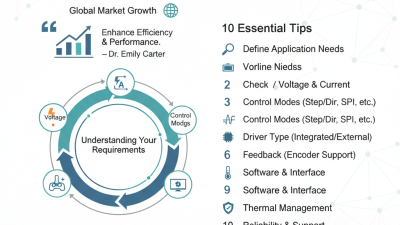
Understanding the specific requirements of your project is fundamental. Each application demands its unique specifications. Careful evaluation of factors such as voltage, current, and intended load is necessary. However, many users find themselves navigating through a haze of technical jargon. It’s essential to stay informed, yet many practitioners still overlook critical details. Balancing expertise with practical application defines success in selecting the right Stepper Motor Controller.

Understanding Stepper Motors and Their Applications
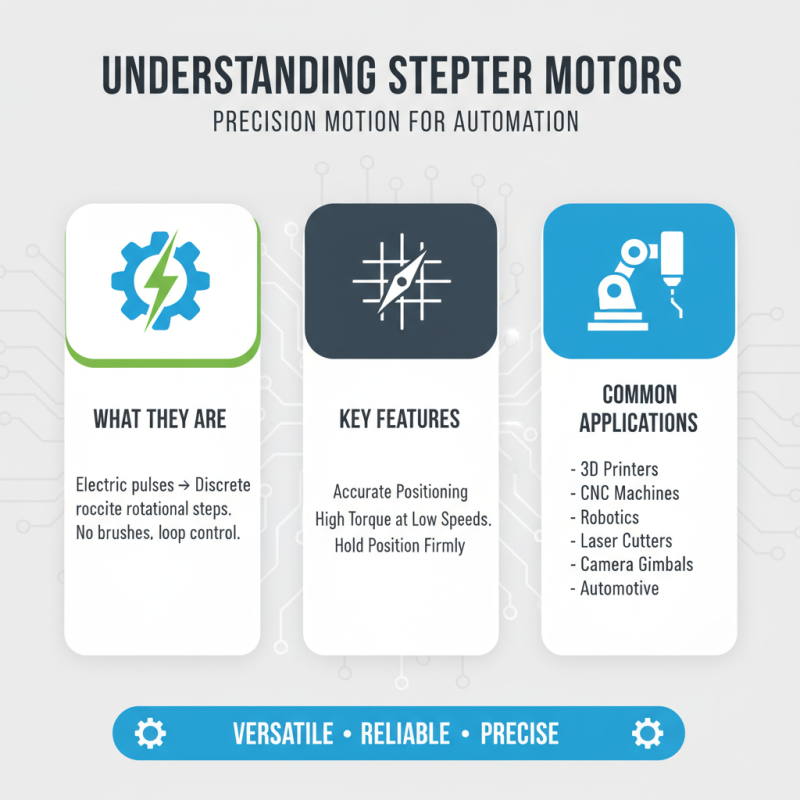
Stepper motors are versatile components widely used in automation and robotics. They convert electrical pulses into precise rotational motion. This capability allows for accurate positioning. Applications range from 3D printers to CNC machines. Their unique design enables them to maintain control without needing feedback systems.
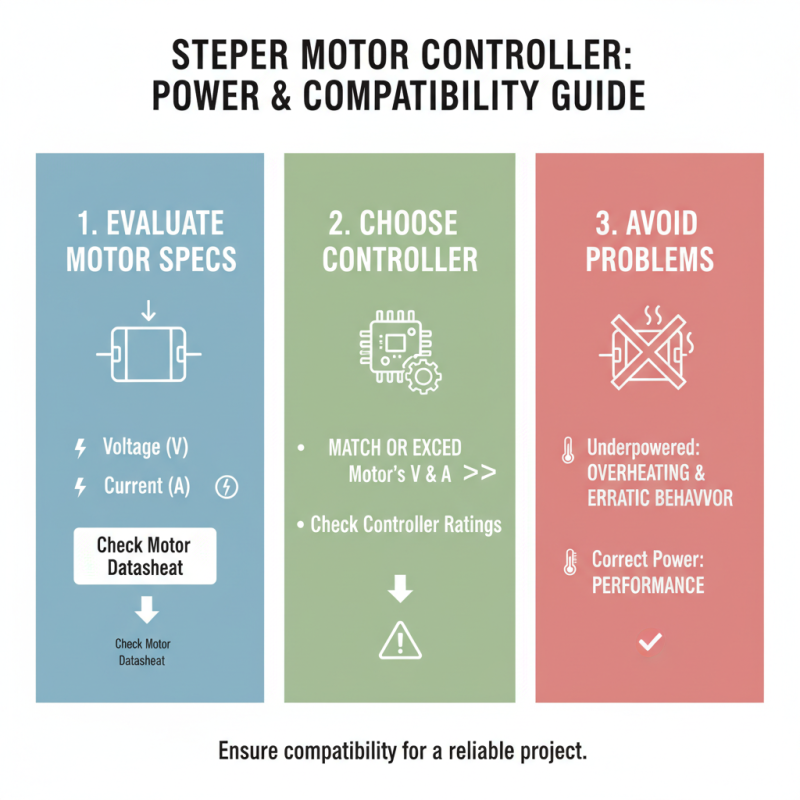
When selecting stepper motors for a project, consider torque needs and speed requirements. Larger projects may require motors with higher torque ratings. Yet, smaller applications can function well with less powerful models. Understanding your specific needs is crucial. It’s a common mistake to overlook power supply compatibility. Ensure the supply matches the motor specifications to avoid performance issues.
Applications like medical devices and industrial equipment often demand reliability. Stepper motors meet these needs effectively, but there are challenges. Not all stepper motors perform equally across different environments. Variability in temperature and humidity can affect performance. Evaluating the conditions in which the motor will operate is necessary for success.
Key Specifications to Consider in Stepper Motor Controllers
Choosing the right stepper motor controller is crucial for your project's success. Key specifications play a vital role in this selection. Pay attention to the current ratings of the controller. The controller must handle the stepper motor's required current without overheating. Matching these ratings helps ensure efficiency and prolongs your motor's lifespan.
Another important specification is microstepping capability. This feature allows precise control over the motor's rotation. Microstepping divides each step into smaller increments, improving resolution and reducing vibrations. It is especially beneficial for applications that require smooth movement or exact positioning.
Tips: Always verify the voltage compatibility between the controller and motor. This can prevent potential damage. Check user reviews or community feedback on different controllers. Experiences shared by others can guide you towards reliable options. Remember, your specific application may call for balancing power and precision. Understanding your requirements is key.
Types of Stepper Motor Controllers: Choosing the Right One
When choosing a stepper motor controller, understanding the types available is crucial. There are several options. Some controllers are designed for simple applications, while others handle complex tasks. Knowing the requirements of your project will guide your decision.
One common type is the chopper driver. It adjusts the voltage supplied to the motor, ensuring smooth operation. These drivers work well for general purposes, providing decent torque and speed. Another option is the closed-loop controller. This type offers feedback to optimize performance. It's suitable for applications requiring precision and consistency.
Tips: Before selecting a controller, assess the motor's specifications. Each motor has unique voltage and current requirements. Make sure the controller can handle these. It's also wise to consider the software support available. Some controllers come with detailed documentation and user communities that enhance usability.
Remember, not all projects need advanced features. Sometimes, simpler controllers suffice. Evaluate the cost-benefit ratio of your options. Reflect on your project's growth potential as well. A basic controller might restrict future enhancements. Choose wisely!
Additional Features and Functionality in Stepper Motor Controllers
When selecting a stepper motor controller, additional features can greatly enhance performance. Controllers may include microstepping for smoother motion. This technology improves precision, reducing vibration and noise. According to industry reports, microstepping can increase step accuracy by up to 80%. A controller with this feature can be crucial for applications requiring fine control, such as 3D printing or CNC machining.
Look for controllers that offer customizable current settings. This allows users to tailor the driving current to the stepper motor based on specific project requirements. Setting the right current can extend the motor's lifespan and optimize efficiency. Additionally, some controllers provide built-in thermal management features. This feature helps prevent overheating and ensures reliable operation during prolonged use.
**Tip:** Evaluate your project needs first. Understand the load, speed, and accuracy required. This will guide you in selecting features that matter most.
Another feature to consider is feedback control. Some advanced controllers integrate sensors to monitor the motor's position. With closed-loop systems, you can benefit from higher torque and reduced missed steps. A notable statistic from robotics research indicates that closed-loop control can improve efficiency by 30%.
**Tip:** Don’t ignore the documentation. Review technical specifications and user feedback carefully. It may save time and resources in the long run.
Stepper Motor Controller Features Comparison


 Baijia Hao