What Are Conveyor Belt Rollers and How Do They Work?
conveyor belt rollers are vital components in material handling systems. They support the conveyor belt and assist in its movement. Understanding how these rollers work can improve efficiency in various industries.
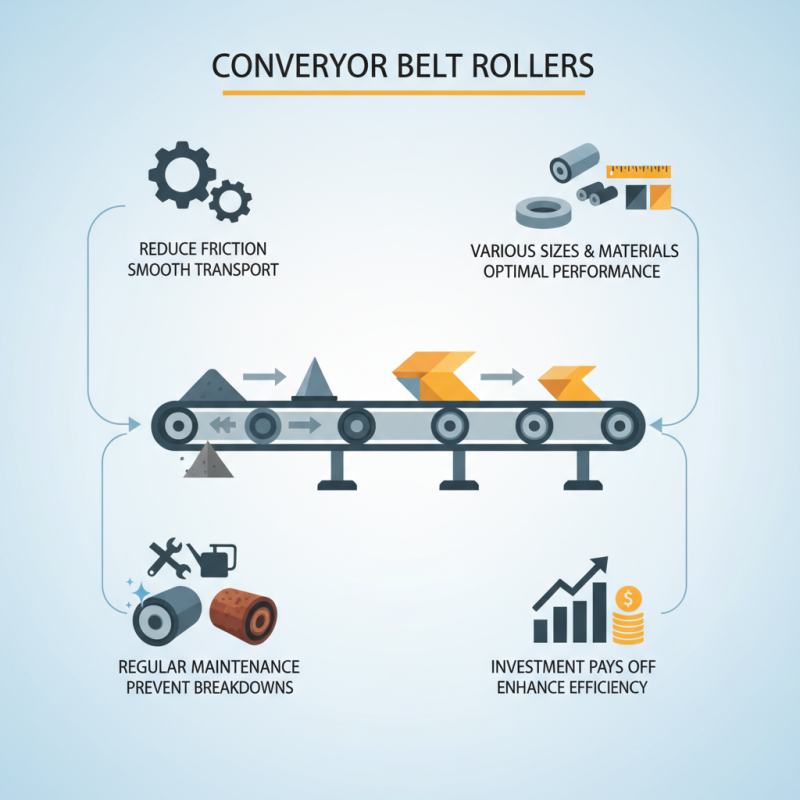
These rollers are designed to reduce friction. They enable the smooth transport of goods over long distances. conveyor belt rollers come in various sizes and materials. Choosing the right roller is critical for optimal performance. Poor selection may lead to frequent breakdowns or inefficiencies.
Regular maintenance of conveyor belt rollers is essential. Neglect can cause wear and tear, leading to costly repairs. It is an ongoing challenge to ensure all components function properly. Companies often overlook roller upkeep. However, investing in maintenance pays off in the long run. Making informed decisions about conveyor belt rollers can enhance operation efficiency.
Definitions and Types of Conveyor Belt Rollers
Conveyor belt rollers are essential components in the material handling industry. They support the conveyor belt and facilitate the movement of materials. Different types include cylindrical, tapered, and return rollers, each serving a specific purpose. According to industry reports, over 60% of conveyor systems utilize roller designs to enhance efficiency.
Cylindrical rollers are the most common. They minimize friction and enable smooth material flow. Tapered rollers, on the other hand, help in guiding the belt, especially around curves. The choice of roller impacts the overall system performance. It’s crucial to select rollers based on the materials being transported.
Research indicates that using the right roller can improve energy efficiency by up to 20%. However, many operators overlook maintenance. Failure to regularly check roller condition can lead to unexpected breakdowns. Inadequate upkeep often results in higher operational costs and downtime. Understanding roller types can greatly enhance operational reliability.
What Are Conveyor Belt Rollers and How Do They Work? - Definitions and Types of Conveyor Belt Rollers
| Roller Type | Material | Application | Load Capacity (kg) | Diameter (mm) |
| Idler Roller | Steel | Transporting bulk materials | 2000 | 100 |
| Return Roller | Rubber | Supporting the return run of the belt | 1500 | 90 |
| Drive Roller | Aluminum | Power transmission to the belt | 2500 | 110 |
| Impact Roller | Polyurethane | Protecting the belt from heavy loads | 1800 | 120 |
| Crowned Roller | Steel | Centering the belt | 2200 | 95 |
The Role of Conveyor Belt Rollers in Material Handling Systems
Conveyor belt rollers play a crucial role in material handling systems. They are the backbone of the conveyor design, facilitating smooth movement and efficiency. These rollers support the belt and materials, reducing friction. A well-functioning roller system enhances productivity while minimizing wear and tear on the belt itself.
Incorporating efficient conveyor belt rollers can improve routine operations. Regular maintenance checks are essential. Look for any signs of wear on the rollers, as this could impact performance. Ensure that they spin freely and aren’t clogged with debris. A small oversight can lead to larger issues down the line, affecting the entire handling process.
Tips: Keep a maintenance log. Document when each roller was checked and what was found. This will help track performance over time. Additionally, consider the environment where the conveyor system operates. Dusty or wet conditions can lead to faster wear. Remember, small changes now can lead to larger savings later. Addressing minor issues promptly is always wise.
How Conveyor Belt Rollers Function: Mechanisms and Motion
Conveyor belt rollers are essential components in material handling systems. They support the conveyor belt and facilitate smooth movement. Understanding their functions helps optimize operational efficiency. The rollers consist of a metal cylinder and bearings. When the conveyor belt moves, these rollers rotate, creating motion. This rotation reduces friction and enhances load distribution.
The mechanisms behind conveyor belt rollers involve several parts. Each roller spins around its axis as the belt travels. This movement enables continuous transport of materials from one point to another. Rollers are often placed at strategic intervals. This placement prevents sagging and maintains the belt's tension. However, improper spacing may lead to inefficiencies. For instance, too close may cause excessive wear.
Conveyor rollers can vary in design. Some are made for heavy loads, while others suit lighter applications. Choosing the right type is crucial. A mismatch can lead to operational failures. Regular maintenance is also important to ensure they function correctly. Dirt and debris can obstruct movement. Over time, neglect may result in significant downtime. Evaluating roller performance regularly can prevent costly repairs.
Factors Influencing the Performance of Conveyor Belt Rollers
Conveyor belt rollers play a crucial role in material handling systems. Their performance is influenced by several factors. One important factor is the material used in roller construction. High-quality materials can reduce wear and tear. This leads to longer service life and lower downtime.
Another critical aspect is the roller's alignment and maintenance. Misalignment can cause uneven wear. This may lead to potential failures. Regular inspections can catch issues early. Therefore, it's essential to establish a routine maintenance schedule. According to industry reports, improper roller maintenance can reduce efficiency by up to 30%.
Tip: Implementing a monitoring system can help keep track of roller conditions. This proactive approach allows for timely repairs.
Environmental conditions also affect roller efficiency. High temperatures and moisture can diminish performance. For example, in humid environments, rust can form quickly on metal rollers. This can lead to significant losses. Operators should consider using corrosion-resistant materials.
Tip: Evaluate the operating environment before selecting roller types. This ensures optimal performance in various conditions.
Maintenance Practices for Ensuring Efficiency of Conveyor Belt Rollers
Proper maintenance of conveyor belt rollers is crucial for optimal performance. Regular inspections can help identify wear and tear early. Failing to notice issues can lead to major downtime. Each roller should be checked for alignment. Misaligned rollers can cause uneven wear on the belt. This simple step significantly improves efficiency.
Lubrication is often overlooked but essential. Using the right lubricant prevents excessive friction. However, over-lubrication can attract dirt and debris. This creates additional problems. The balance is delicate. Condition monitoring of the rollers is another vital practice. Sensors can detect anomalies in performance. Integrating technology can enhance maintenance schedules.
Operators should be trained to identify signs of problems. Unusual noises or vibrations often signal maintenance is needed. Regularly reviewing maintenance logs helps in spotting patterns. Ignoring these records can lead to repeated mistakes. Continuous improvement should be the goal, especially when you notice recurrent issues. Each observation counts towards a smoother operation.
Conveyor Belt Rollers Efficiency: Maintenance Practices Impact


 Baijia Hao