10 Essential Tips for Choosing Industrial Servo Motors?
Choosing the right Industrial Servo Motors can significantly impact your automation projects. These motors are critical for enhancing performance and precision in various applications. Understanding the essentials of servo motors is vital for making informed decisions.
Industrial Servo Motors come in many types, each designed for specific tasks. Factors such as torque, speed, and size must align with your project requirements. A mismatch can lead to inefficiencies or equipment failures.
Moreover, the selection process often involves considering the manufacturer's reputation. Reliability and product support are crucial in this industry. You might encounter options that seem ideal initially, but further research may reveal shortcomings. Take your time to evaluate all aspects to ensure you choose wisely.
Understanding Different Types of Industrial Servo Motors
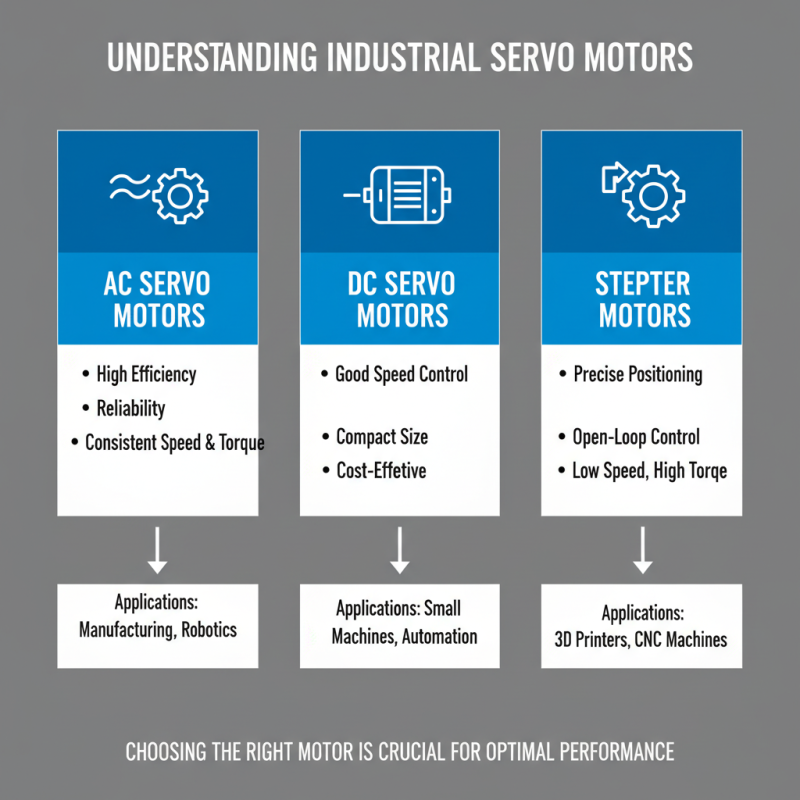
When selecting industrial servo motors, understanding their types is crucial. Industrial servo motors typically fall into three categories: AC, DC, and stepper motors. Each type has distinct characteristics and applications. AC servo motors are favored for their high efficiency and reliability. They excel in applications requiring consistent speed and torque, making them a popular choice in manufacturing.
DC servo motors, on the other hand, offer simplicity in control and are better suited for low-speed applications. They provide quick response times, which can be advantageous in precise positioning tasks. Reports from industry analysts indicate that the demand for DC servo motors is growing, particularly in robotics and automation, reflecting a shift in manufacturing processes.
Stepper motors stand out for their ability to provide precise control of position and speed. They are commonly used in CNC machinery and 3D printers. However, their torque can decrease at higher speeds, which may limit their effectiveness in certain applications. Understanding these nuances helps engineers make informed decisions. As industries evolve, the need for specialized knowledge about these motor types is essential for optimizing performance and efficiency.
Key Specifications to Consider for Selecting Servo Motors
Choosing the right servo motor is crucial for industrial applications. Start by considering torque requirements. Know how much torque you need for your specific tasks. Insufficient torque can lead to equipment failure. Excessive torque, however, can waste energy.
Next, look at speed ratings. Servo motors come with different speed specifications. Ensure the motor you select matches the speed needed for your operations. Too slow or too fast can affect performance. Keep in mind the acceleration and deceleration capabilities as well.
Another critical factor is the feedback system. Different applications require different types of feedback. Precision tasks need high-resolution feedback, while simpler ones may not. Think about environmental conditions too. Dust, heat, and moisture can all impact motor performance. Examine these specifications carefully to avoid future complications.
Evaluating Torque and Speed Requirements for Your Application
When evaluating torque and speed requirements for industrial servo motors, it’s vital to understand your application’s specific needs. Many industries rely on precise movements. Accurate torque calculations are crucial. According to a recent report from the International Society of Automation (ISA), uncalibrated torque can lead to significant performance losses. Ensuring you select a motor with the right torque rating can directly impact operational efficiency.
Speed is another key parameter. Motors must operate at optimal speed ranges to achieve desired performance. For example, most servo motors operate between 100 to 3000 RPM. An ISA study highlighted that running motors outside their ideal speed could result in overheating and increased wear. This is often overlooked but leads to costly downtimes.
It’s also important to consider peak torque versus continuous torque. Peak values may seem attractive but should match your application's continuous demands. Some applications may require a burst of power temporarily, while others need consistent torque throughout their operation. Always measure and analyze your application's requirements closely. This attention to detail will help prevent oversizing or undersizing issues that can cost both time and resources.
Torque and Speed Requirements for Industrial Servo Motors
Assessing Control Systems Compatibility with Servo Motors
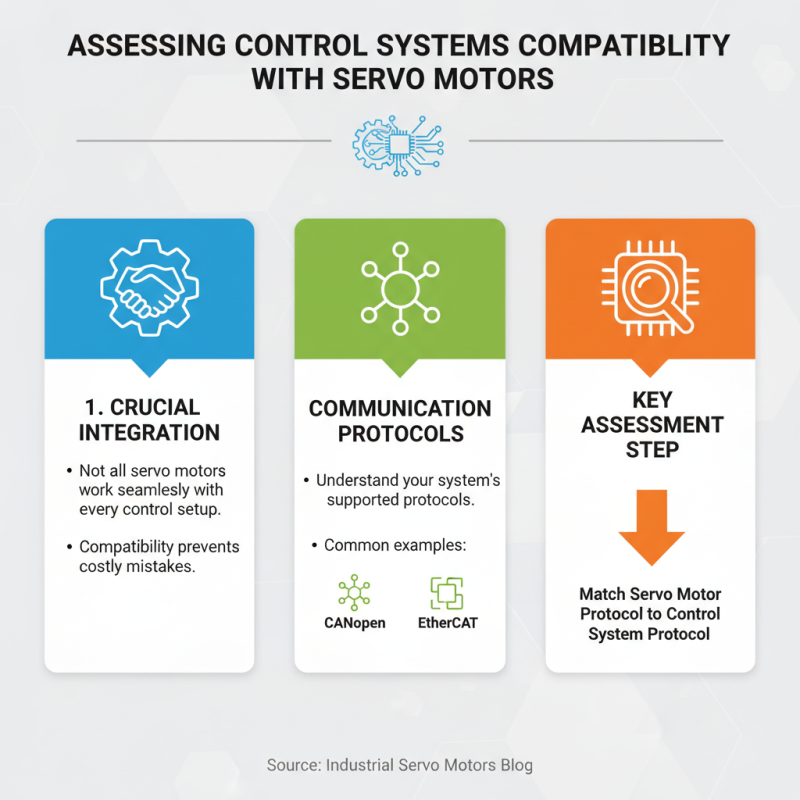
When choosing industrial servo motors, compatibility with control systems is crucial. Not all servo motors work seamlessly with every control setup. Assessing integration begins with understanding the communication protocols your control system supports. Common protocols include CANopen and EtherCAT. Knowing these details can prevent costly mistakes.
Different servo motors have specific requirements. For instance, some require precise feedback mechanisms, like encoders. If your control system lacks the right input channels, you may face compatibility issues. Consider whether your control hardware can support necessary motor feedback types. These factors determine optimal performance for your application.
Sometimes, engineers overlook compatibility until it's too late. Integrating a motor without assessing system requirements can lead to operational delays. Test your motor's behavior within your control environment before making a purchase decision. Seek expert advice when uncertain. Ensure your choice aligns with both current and future needs in your facility.
Analyzing Cost vs. Performance for Servo Motor Selection
When selecting an industrial servo motor, analyzing cost versus performance is crucial. A high-performance motor may seem appealing, but price can quickly escalate. You need to consider the operational environment. Harsh settings may require more robust models, which could increase initial costs. This trade-off often leads to extensive research and careful budgeting.
Efficiency is a vital factor. Higher performance motors can reduce energy costs over time. Consider how long you’ll use the motor daily. A motor that costs more upfront may offer better savings in the long run. However, it’s essential to reflect on whether these savings align with your operational needs. Not all applications require the latest technology. Sometimes, older models suffice.
Reliability is another aspect to weigh in. A lower-cost motor that frequently requires maintenance can add hidden costs. Assessing performance metrics is beneficial here. Look for torque ratings, speed capabilities, and thermal performance. Balancing these factors can be challenging. A motor that meets all high standards may not fit your budget. Understanding the specific needs of your application helps clarify these choices. Careful evaluation is the key.


 Baijia Hao