What is an Industrial Servo Motor and How Does it Work?
Industrial Servo Motors are essential components in modern manufacturing. Their precision and responsiveness make them invaluable for automation. According to a report by Research and Markets, the global servo motors market is projected to reach $11.29 billion by 2025, highlighting their growing significance. This surge is driven by the demand for automation in various industries such as robotics, packaging, and automotive.
These motors operate using closed-loop control systems. They adjust their position and speed based on feedback. This enables them to perform complex tasks with high accuracy. In fact, data from the International Federation of Robotics indicates that industrial robots, many of which rely on servo motors, are expected to reach 2.7 million units by 2025. Such figures emphasize the integral role of Industrial Servo Motors in advancing technology.
However, not all applications may benefit from servo motors. In some cases, cost might outweigh the precision advantages. Additionally, understanding the specific needs of a project is critical. The wrong choice of motor can lead to inefficiencies. As the industry evolves, careful consideration of these factors remains paramount.

What is an Industrial Servo Motor?
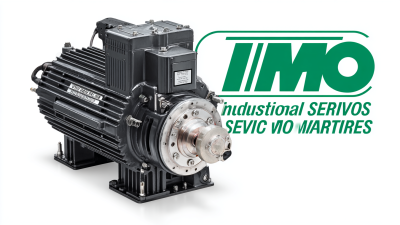
An industrial servo motor is a precision device used in various automation applications. It provides control and accuracy in moving components. Commonly found in robotics, CNC machinery, and conveyor systems, these motors are essential for operations requiring high performance. They typically include a motor, feedback device, and controller.
These motors operate using a closed-loop system. The feedback device measures the motor’s position, speed, or torque. The controller then adjusts the input to maintain accuracy and stability. This allows for smooth and precise movements vital for industrial processes. Therefore, choosing the correct type of servo motor is crucial based on application needs.
Tip: Regularly maintain your servo motors to ensure their longevity. Clean dust and debris that can affect their operation. Consider keeping spare parts handy for quick replacements.
It’s essential to evaluate the requirements of your tasks before selecting a servo motor. Not every application needs a high-end servo motor. Sometimes, simpler solutions can suffice. Understanding your specific needs can save costs and improve efficiency.
Key Components of an Industrial Servo Motor
Industrial servo motors are crucial in various automation processes. Understanding their key components can greatly enhance their application. These motors typically consist of four primary elements: the motor itself, the feedback device, the controller, and the drive. Each element plays a vital role in ensuring precision and efficiency.
The motor, often a brushless DC type, delivers high torque over a wide range of speeds. The feedback device, usually an encoder, provides real-time data on the motor’s position and speed. This information allows for accurate adjustments during operation. Studies indicate that the use of high-resolution encoders can improve position accuracy by over 30%. The controller interprets commands and communicates with the drive, optimizing performance across tasks. Recent reports highlight that effective motion control systems can reduce operational costs by an estimated 15%.
In practice, these components must work in sync. If any part fails or operates inefficiently, it can lead to significant downtime. This can be a major concern for manufacturers. Inadequate feedback systems may result in overshooting or undershooting the desired position, reflecting the importance of precision engineering. Continuous monitoring and regular maintenance are critical in addressing these challenges. The complex interplay between components demands a solid understanding of each role to implement optimal solutions in automation tasks.
What is an Industrial Servo Motor and How Does it Work? - Key Components of an Industrial Servo Motor
| Component |
Description |
Function |
| Servo Motor |
A rotary or linear actuator that allows for precise control of angular or linear position. |
Translates electrical signals into mechanical motion. |
| Controller |
A device that sends signals to the servo motor to control its position, velocity, and torque. |
Processes input signals and regulates motor function accordingly. |
| Feedback Sensor |
Devices such as encoders or resolvers that provide feedback regarding the position and movement of the motor. |
Ensures accurate positioning by sending information back to the controller. |
| Power Supply |
Supplies electrical energy to the servo system. |
Provides the necessary power for operation and performance. |
| Drive |
A component that converts command signals from the controller into voltage and current to drive the motor. |
Controls the position and speed of the motor based on feedback. |
Working Principle of Industrial Servo Motors
Industrial servo motors are critical in automated systems. They provide precise control of position, velocity, and acceleration. The working principle revolves around feedback mechanisms that adjust motor actions based on real-time data. Typically, they integrate a closed-loop system. This ensures accuracy and reliability in various applications.
A key component of servo motors is the encoder, which measures the motor’s position. This feedback is crucial for maintaining precision. For instance, a report from the International Federation of Robotics highlights that over 300,000 industrial robots are in operation globally. Many of these utilize advanced servo motor technology for optimal performance. The closed-loop system continuously compares the desired position to the actual position, allowing for real-time corrections.
However, despite these advantages, challenges in installation and tuning can arise. Incorrect calibration may lead to misalignment and inefficiency. Additionally, the complexity of the system can result in higher maintenance costs. As automation continues to grow, understanding these challenges is essential for engineers. Effective training and resources are necessary for overcoming potential issues in servo motor application.
Industrial Servo Motor Performance Comparison
This chart compares the performance metrics of different industrial servo motors, showcasing their torque, speed, efficiency, and response time. This data helps manufacturers make informed decisions when selecting servo motors for their applications.
Types of Industrial Servo Motors and Their Applications
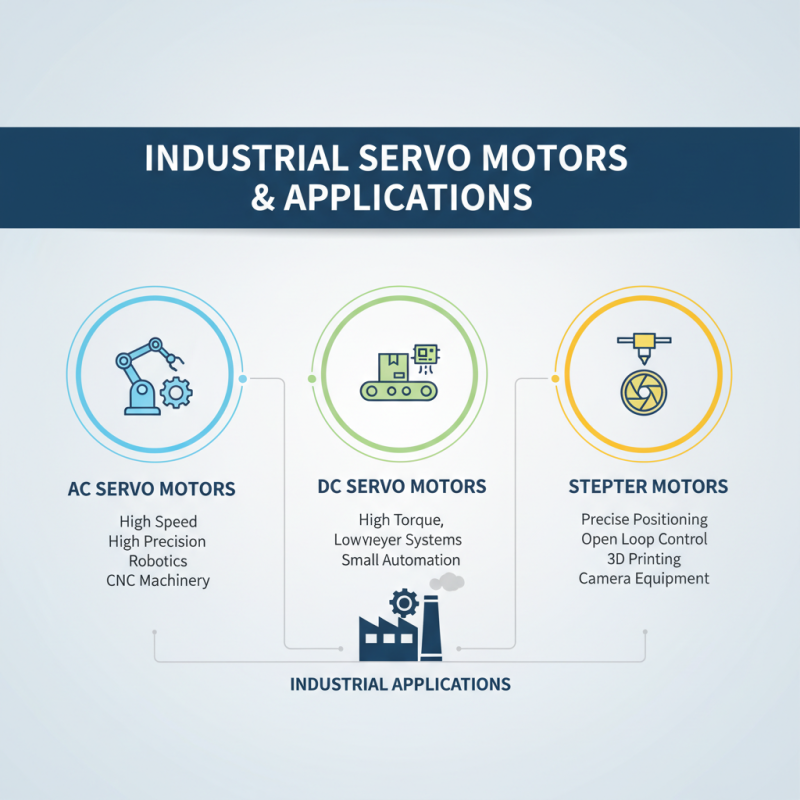
Industrial servo motors come in various types, each designed for specific applications. The main types are AC servo motors, DC servo motors, and stepper motors. AC servo motors are ideal for high-speed and high-precision tasks. They are widely used in applications like robotics and CNC machinery. DC servo motors, on the other hand, offer high torque at low speeds, making them suitable for applications in conveyor systems and small automation tasks.
Stepper motors divide a full rotation into several steps. They are perfect for applications requiring precise positioning, such as 3D printers and laser cutters. Different industries utilize these motors based on their unique requirements for speed, precision, and control. Selecting the right motor for your application can greatly affect performance.
Tips: When choosing a motor, consider the load requirements and response time. The wrong choice could lead to inefficiencies. Additionally, always review the specifications and feedback from trusted sources to ensure a reliable decision. Assess your project needs carefully to avoid common pitfalls. Consider consulting with experts who understand your specific application to leverage their experience effectively.
Benefits of Using Industrial Servo Motors in Automation
Industrial servo motors are transforming automation processes across various sectors. One of the key benefits is their precision. Reports indicate that servo motors can achieve positioning accuracy of up to ±0.01 mm. This precision is crucial in applications like robotics and CNC machines. With the ability to control speed and torque, these motors ensure that operations run smoothly, reducing errors that can lead to costly downtime.
Another significant advantage is energy efficiency. According to the International Energy Agency, industrial motors account for approximately 70% of the world's energy consumption in the sector. Servo motors, on the other hand, require less energy due to their closed-loop control systems. This helps to save on operating costs while promoting a greener footprint.
However, the investment in servo motors can be substantial. Many businesses may hesitate at first due to the initial capital outlay. It's essential to weigh this against long-term savings and improved productivity. Companies can benefit from a careful analysis of performance metrics and operational needs. Finding the right balance between cost and efficiency can be challenging but rewarding in the long run.


 Baijia Hao