Top Stepper Motor Controller Options for Your Projects?
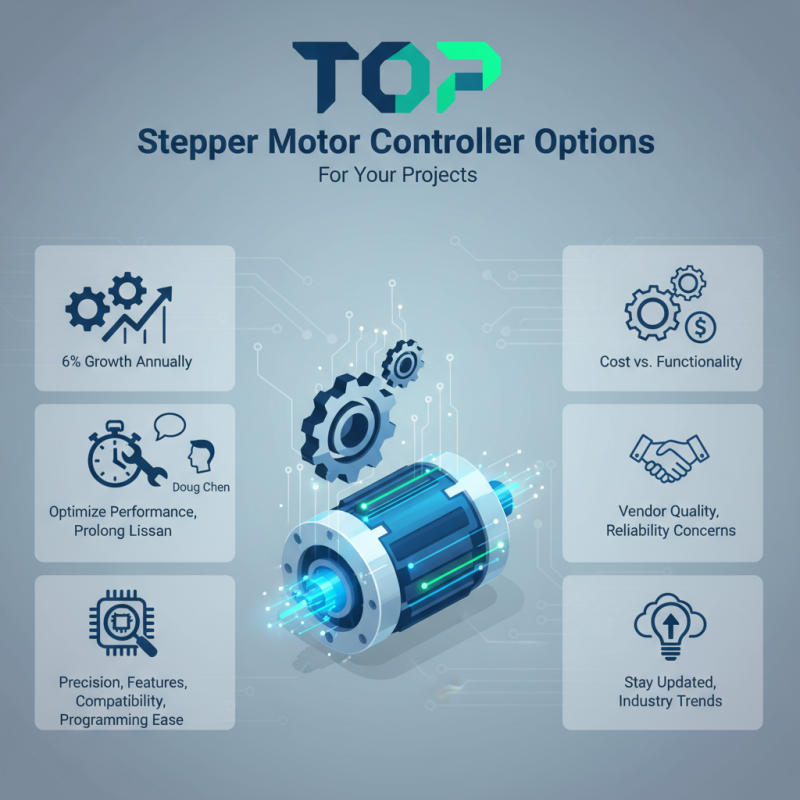
In the realm of automation and robotics, choosing the right Stepper Motor Controller can significantly impact project success. According to a recent report from Automation World, the demand for stepper motors is projected to grow by 6% annually, highlighting the importance of effective controllers in various applications. Doug Chen, a renowned expert in motion control systems, stated, “The right controller can optimize performance and prolong the lifespan of stepper motors.”
Companies are increasingly reliant on precision, and the Stepper Motor Controller plays a vital role in achieving that precision. However, with numerous options available, selecting the ideal controller can feel overwhelming. Features, compatibility, and ease of programming must be considered. As technology advances, new attributes are emerging, making it essential to stay updated with industry trends.
Despite advancements, many engineers struggle with integration challenges. They need to balance cost and functionality when selecting controllers. This introspection often leads to scrutiny of existing choices. The variability in quality among vendors can lead to inconsistent performances, raising valid concerns about reliability. Being informed about different options and their specific advantages can guide engineers in making decisions that enhance their projects.
Overview of Stepper Motor Controllers and Their Applications
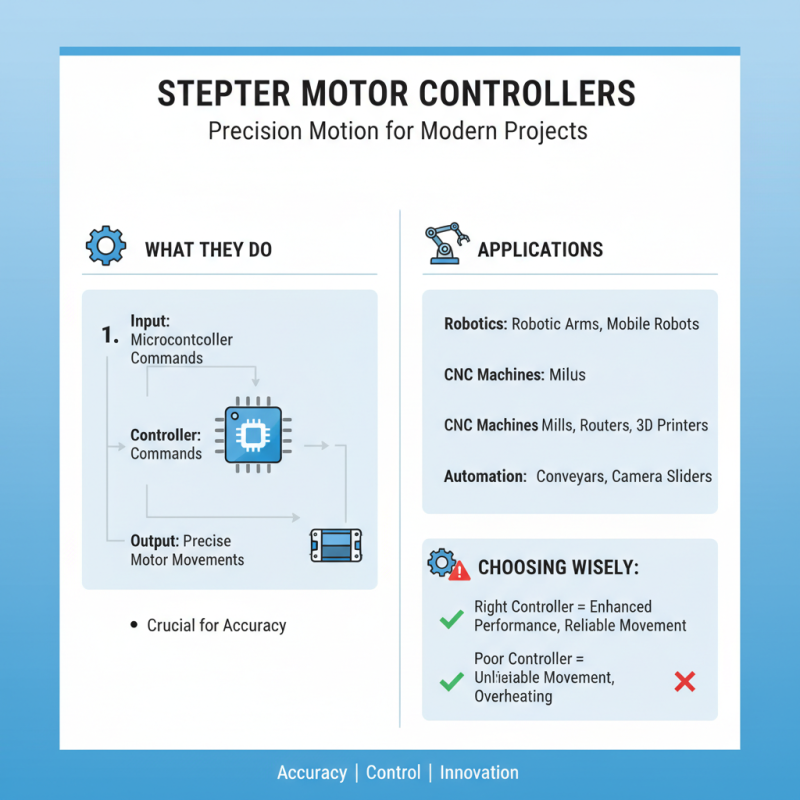
Stepper motor controllers play a critical role in many projects, from robotics to CNC machines. They convert commands from a microcontroller into precise motions. This precise control is vital when accuracy is needed. The right controller can enhance the overall performance of the motor. A poorly chosen controller may lead to unreliable movement or overheating.
The versatility of stepper motors allows them to be used in various applications. They excel in scenarios requiring exact position control, like 3D printers and automated assembly lines. Additionally, they are often found in medical devices, where precision is crucial. However, it’s essential to select a controller that matches the motor's specifications. Experimenting with different configurations can sometimes yield unexpected results. Users must be cautious about power ratings and torque requirements; mismatches can cause failures.
Some controllers support advanced features, like microstepping. This allows for smoother motion and reduced vibration. However, users may face a learning curve. Understanding the intricacies of these controllers can be challenging. Adequate research and testing are necessary to find the optimal setup for a given project. Different environments may demand tailored solutions. Make sure to account for thermal management and the specific application needs.
Key Features to Consider When Selecting a Stepper Motor Controller
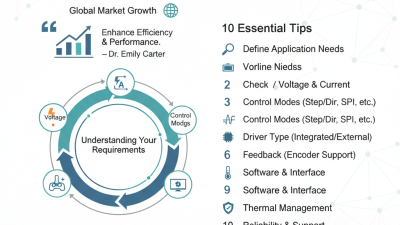
When choosing a stepper motor controller, several key features are vital. One primary consideration is the control method. Different types of control methods can offer varying levels of precision and responsiveness. Look for options like microstepping for smoother operation. This can enhance accuracy in your projects, especially in robotics or CNC applications.
Another important factor is current rating. Ensure the controller can handle the maximum current your motor requires. Overloading can cause overheating, leading to failure. Make note of the voltage range as well. Some controllers work best within a specified input range. Using a compatible voltage can help in avoiding performance issues.
Tips: Check compatibility with your existing system. Always refer to the specifications carefully. Doing so prevents costly mistakes. Also, consider the ease of integration. A well-documented controller saves time. Read user reviews to gauge reliability. Real-world experiences offer valuable insights that specifications cannot provide.
Top Stepper Motor Controller Options for Your Projects
| Controller Type |
Max Current (A) |
Microstepping Support |
Control Interface |
Operating Voltage (V) |
Key Features |
| Digital Stepper |
2.5 |
Up to 1/32 |
PWM, UART |
12-30 |
Low power consumption, compact design |
| Analog Stepper |
3.0 |
Up to 1/16 |
Analog voltage, GPIO |
10-24 |
High precision, reliable performance |
| Closed-loop Stepper |
4.0 |
Up to 1/256 |
CAN, EtherCAT |
24-60 |
Feedback control, improved accuracy |
| Hybrid Stepper |
2.0 |
Up to 1/32 |
SPI, UART |
12-40 |
Versatile, high torque |
| Stepper Motor Driver |
5.0 |
Up to 1/128 |
PWM, I2C |
20-50 |
Easy to integrate, scalable |
Top Recommended Stepper Motor Controllers for Beginners
When beginning a project involving stepper motors, selecting the right controller can be crucial. For beginners, understanding the features and compatibility of various controllers is essential. Look for options that allow easy integration with common programming environments. Many entry-level controllers have intuitive interfaces, making them user-friendly.
Tips: Always read the datasheets. They provide insight into electrical specifications. Understanding torque ratings is vital as well. Not all motors handle load equally.
Another factor to consider is the power supply requirements. Some controllers have specific voltage ranges. Ensure your power supply matches these needs. A mismatch can lead to malfunctions or damage. Experimenting with different types also helps in understanding performance characteristics over time.
Tips: Start with simpler designs. As skills grow, you can tackle more complex projects. Learning through trial and error often yields the best results. Don't hesitate to seek help online or from local maker communities.
Advanced Options for Professional Stepper Motor Control Projects
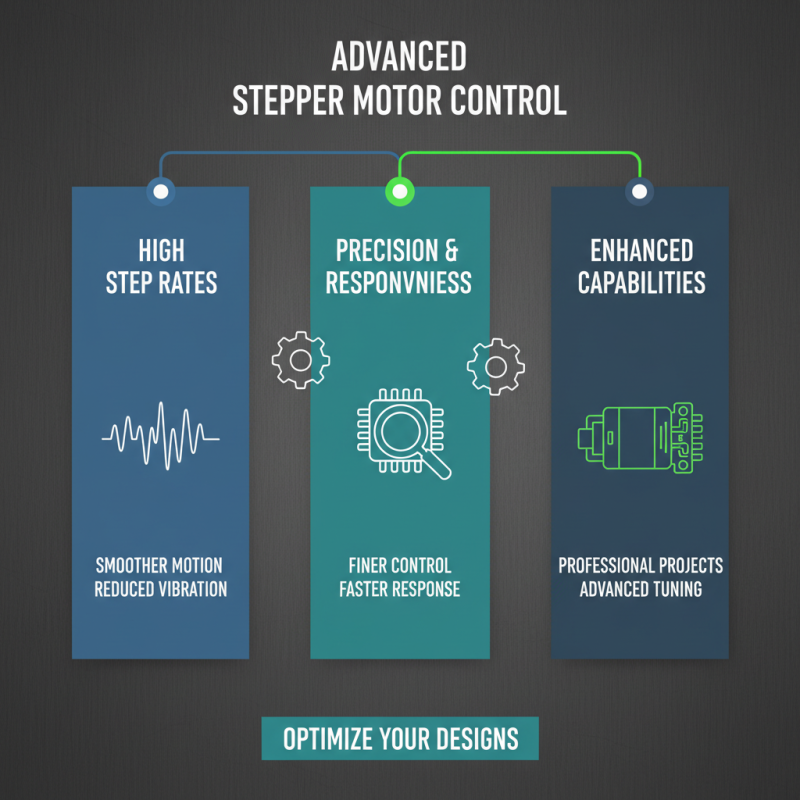
When venturing into professional stepper motor control, several advanced options stand out. These controllers offer features that enhance precision and responsiveness. For instance, some models can handle higher step rates. This means smoother motion and less vibration. Fine-tuning your projects becomes easier with such devices.
One intriguing option includes controllers with adaptive tuning. They adjust to load conditions, ensuring optimal performance. However, these systems can require thorough testing. Balancing responsiveness with accuracy is crucial. Each project may present unique challenges that demand different settings or adjustments. You might find varying results when switching between different applications.
Integrating advanced features like microstepping can further refine control. Microstepping allows for increased resolution and smoother operation. But, achieving the perfect balance between speed and torque can be tricky. Some users report frustration in finding the ideal configuration. Documenting your experiments will help in pinpointing what works best for your specific application.
Comparative Analysis of Cost and Performance for Popular Controllers
When selecting a stepper motor controller, cost and performance are critical factors.
Different controllers offer unique capabilities that can impact your project's success.
It is essential to assess the trade-offs between price and functionality.
Some low-cost options have limitations in speed and torque.
They might not handle complex applications well. Evaluating your specific needs will help you make informed choices.
Performance varies widely among popular controllers.
High-performance models provide greater precision and efficiency.
However, they often come at a premium price.
Analyzing the specifications of each option is vital.
Torque ratings, voltage requirements, and microstepping capabilities can significantly affect your design.
Cost-effective controllers may deliver decent performance but can fall short in demanding scenarios.
Consider these aspects carefully.
User experience plays a significant role in your choice.
Read reviews and user testimonials to gauge reliability.
Some users report challenges with specific controllers that others find excellent.
A controller might excel in one project but fail in another.
This variability highlights the importance of aligning specifications with your project goals.
Reflect on the balance between affordability and performance for optimal results.


 Baijia Hao